GO-TO-MARKET STRATEGY
What Is a Go-To-Market Strategy?
A go-to-market (GTM) strategy defines how a business delivers value to customers and generates revenue through structured market positioning, sales, and customer acquisition. It connects product, marketing, and sales into one unified system that drives predictable growth.
Without a clear GTM strategy, businesses operate in silos, leading to inconsistent messaging, poor conversion, and uncoordinated efforts. A strong GTM framework ensures all teams work toward the same customer journey—from awareness to long-term retention.
Hunter, Farmer & Fisherman GTM Models
Modern GTM strategies are built around three core models: Hunter (new customer acquisition), Farmer (existing customer expansion), and Fisherman (attracting customers through systems and inbound demand). Each model represents a different approach to growth.
Most successful businesses combine these models based on their market, product, and growth stage to build a balanced and scalable revenue strategy.

The Hunter GTM strategy centers on aggressive outbound prospecting and new customer acquisition. Hunters identify target accounts, initiate contact through cold outreach, and pursue opportunities until they close or definitively die. This model thrives on activity metrics, persistence, and the ability to create opportunities where none existed before. It’s high-energy, high-effort, and typically high-cost, but it can penetrate markets quickly and generate revenue even when inbound demand doesn’t exist yet.
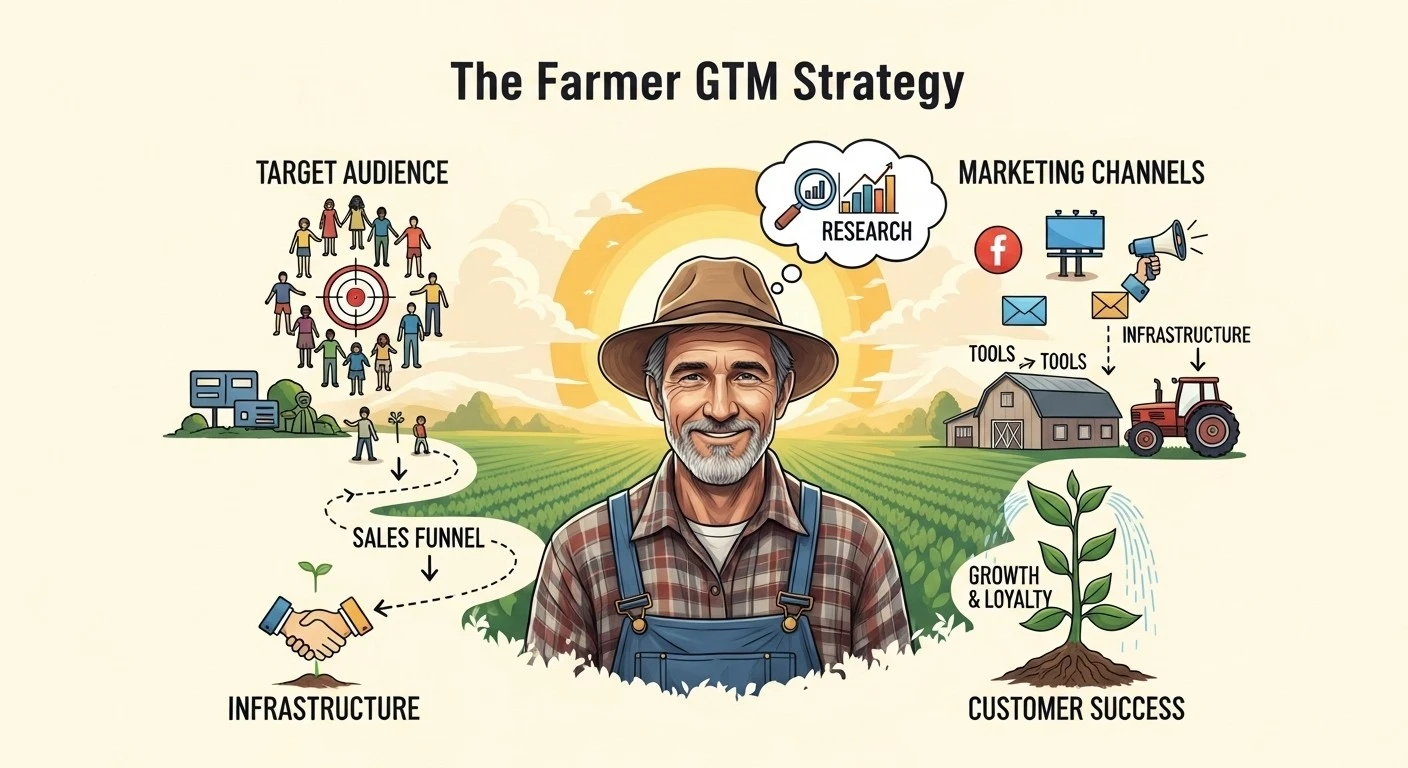
The Farmer GTM strategy focuses on cultivating existing customer relationships to maximize lifetime value. Farmers nurture accounts over time, identifying expansion opportunities, preventing churn, and turning satisfied customers into advocates who refer new business. This model excels at efficiency—the cost to expand an existing customer is typically one-fifth to one-tenth the cost of acquiring a new one. Farming works beautifully when you have a strong customer base and clear paths to upsell or cross-sell.
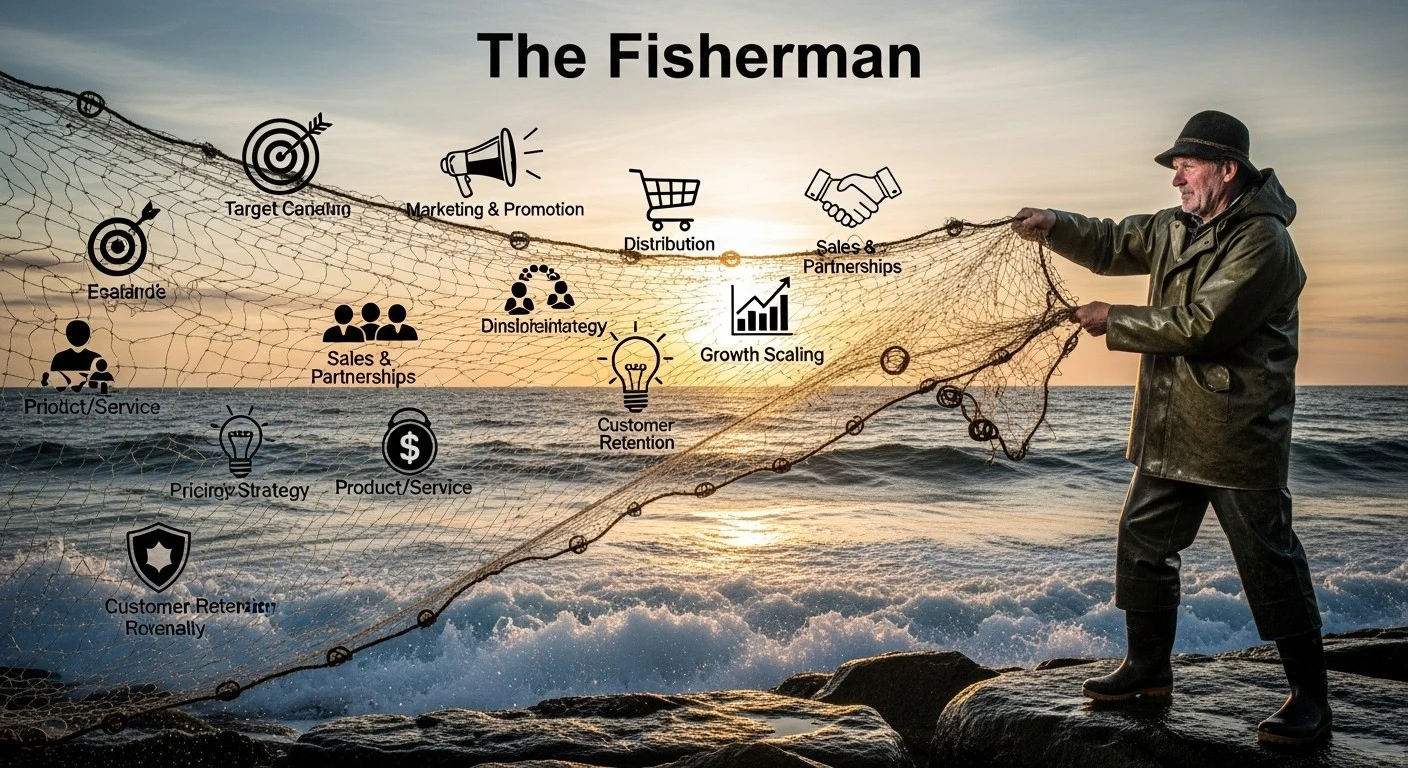
Fisherman GTM Strategy
The Fisherman GTM strategy focuses on attracting customers through inbound systems like content, SEO, and thought leadership. Instead of direct outreach, it builds demand by positioning the business where customers naturally search and discover solutions.
Hunter GTM Strategy
The Hunter GTM strategy is a proactive outbound approach where sales teams directly pursue target customers through outreach, calls, and relationship building. It focuses on creating opportunities instead of waiting for demand.
Farmer GTM Strategy
The Farmer GTM strategy focuses on growing revenue from existing customers through retention, expansion, and long-term relationship building. It maximizes lifetime value by continuously increasing value within current accounts.
Choosing the Right GTM Model
The best GTM strategy depends on your business type, market, and stage of growth. Most companies combine Hunter, Farmer, and Fisherman models to balance acquisition, retention, and inbound demand for sustainable revenue growth.