W A E L S A L A M A

Loading...

Contact Info

Your Marketing Is Working in Two Directions. It Should Be Working as One.

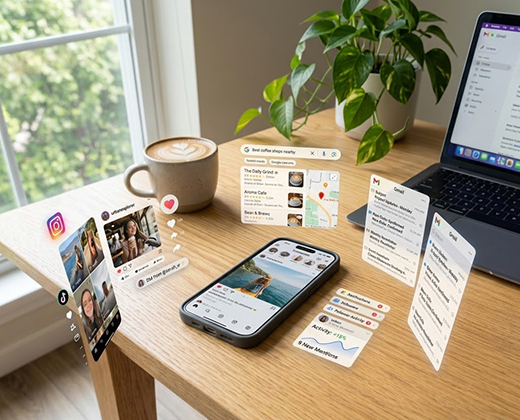
Many businesses today run two parallel marketing operations without realizing it. On one side, a digital presence — social media, paid advertising, email campaigns, and SEO. On the other, traditional marketing activity — events, print, outdoor advertising, direct sales, and in-store experiences. Both are generating activity. Neither is fully informing the other. And the customer, who moves seamlessly between the physical and digital world, experiences a brand that feels inconsistent, fragmented, and difficult to trust.

The gap between online and offline marketing is one of the most common and most expensive strategic mistakes businesses make. It dilutes brand equity, weakens campaign performance, and creates a customer journey full of disconnects that erode confidence and conversion at every stage. Online and offline marketing consulting addresses this directly — building integrated marketing strategies that make every channel stronger because they are working together rather than in parallel.

Wael Salama works with businesses that have recognized this fragmentation and are ready to replace it with a coherent, unified marketing approach that delivers a consistent brand experience and measurably stronger commercial results.

Integrated Marketing Strategy Development

The foundation of effective online and offline marketing is a single, unified strategy that governs both. This phase establishes the strategic framework that connects all marketing activity — digital and traditional — around shared objectives, consistent positioning, and a coherent customer journey.

Integration begins at the strategy level, not the execution level. Attempting to connect online and offline efforts after campaigns have already been designed independently produces superficial alignment at best. Building the strategy from a unified foundation ensures that every channel — regardless of whether it is digital or physical — is contributing to the same commercial outcomes and reinforcing the same brand narrative.

Brand Consistency Across All Channels

A brand that looks, sounds, and feels different depending on whether a customer encounters it online or in the physical world is a brand that struggles to build the trust and recognition that drive long-term customer relationships. This phase develops the brand standards, messaging architecture, and visual identity guidelines that ensure consistency across every touchpoint — from digital advertising and social media to print materials, events, and in-store environments.

Brand consistency is not a cosmetic concern. It is a commercial one. Businesses with consistent cross-channel brand presentation significantly outperform those without it in both customer acquisition and retention — because consistency builds familiarity, and familiarity builds the confidence customers need to commit.

Customer Journey Mapping & Channel Alignment

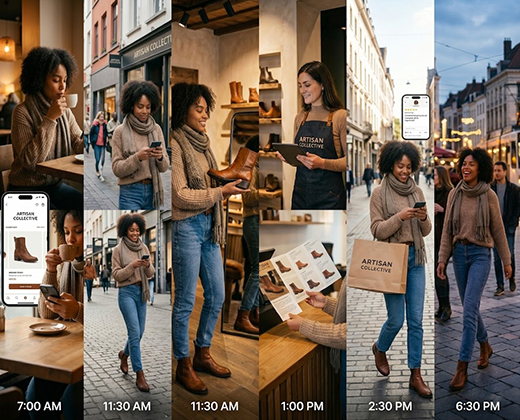
Understanding how customers actually move between online and offline touchpoints is essential to building a marketing strategy that meets them where they are. Most customers today do not distinguish between digital and physical interactions with a brand — they experience both as a single, continuous relationship. Their journey may begin with a social media post, continue through an in-store interaction, and conclude with an online purchase — or in any number of other sequences.

This phase maps the real customer journey for each priority audience segment, identifying where online and offline touchpoints intersect, where handoffs between channels are creating friction, and where integrated experiences could significantly improve conversion rates and customer satisfaction. The output is a channel alignment strategy that designs the customer journey as a unified experience rather than a collection of separate interactions.

Online Marketing Strategy & Performance

Within the integrated framework, the online marketing strategy is developed and optimized across the channels most relevant to the target audience and business objectives. This covers search engine visibility, paid digital advertising, social media presence, content marketing, email strategy, and the conversion infrastructure that turns digital engagement into measurable commercial outcomes.

Online marketing consulting at this level is not about managing individual channels in isolation. It is about understanding how digital activity supports and amplifies the broader marketing strategy — and ensuring that digital performance metrics are always connected to business outcomes rather than vanity indicators.

Offline Marketing Strategy & Execution Planning

Traditional marketing channels retain significant commercial value — particularly for businesses operating in industries where personal relationships, physical presence, and direct engagement remain central to the buying process. Events, sponsorships, print advertising, direct mail, outdoor media, and in-person sales activity all have legitimate strategic roles when deployed with purpose and precision.

This phase evaluates which offline channels are most relevant to the business’s target audience and commercial objectives, and builds an offline marketing strategy that is designed to complement and reinforce digital efforts — creating a multiplier effect where each channel makes the other more effective.

Campaign Integration & Unified Messaging

The most powerful marketing campaigns are those where online and offline executions feel like two expressions of the same idea rather than two separate campaigns running simultaneously. This phase develops integrated campaign frameworks where digital and traditional executions share a common creative concept, messaging hierarchy, and strategic objective — while being adapted appropriately for the specific context and audience behavior of each channel.

Integrated campaigns consistently outperform siloed ones because they create multiple reinforcing impressions across different contexts, building the kind of cumulative brand impact that neither channel can achieve independently.

Measurement, Attribution & Performance Optimization

One of the primary reasons online and offline marketing remain disconnected in many organizations is the perceived difficulty of measuring their combined impact. This phase builds the measurement framework and attribution model that gives the business a clear, accurate view of how online and offline channels are each contributing to commercial outcomes — and how their interaction is creating value that neither could generate alone.

With proper measurement in place, marketing investment decisions become more confident, optimization becomes more precise, and the case for integrated marketing becomes self-reinforcing through the results it consistently produces.

Marketing That Works Together Works Better.

Fragmented marketing is not just an operational inefficiency — it is a competitive disadvantage. While your business runs disconnected campaigns across disconnected channels, competitors with integrated strategies are building stronger brand recognition, more consistent customer experiences, and higher conversion rates across every touchpoint.

The solution is not more marketing activity. It is smarter, more unified marketing strategy — where every channel, online and offline, is pulling in the same direction with the same message toward the same commercial objectives.

Working with Wael Salama, your business gains the strategic expertise to close the gap between your digital and traditional marketing efforts and build an integrated approach that is greater than the sum of its parts.

Your marketing should work as one. Let’s make that happen.